
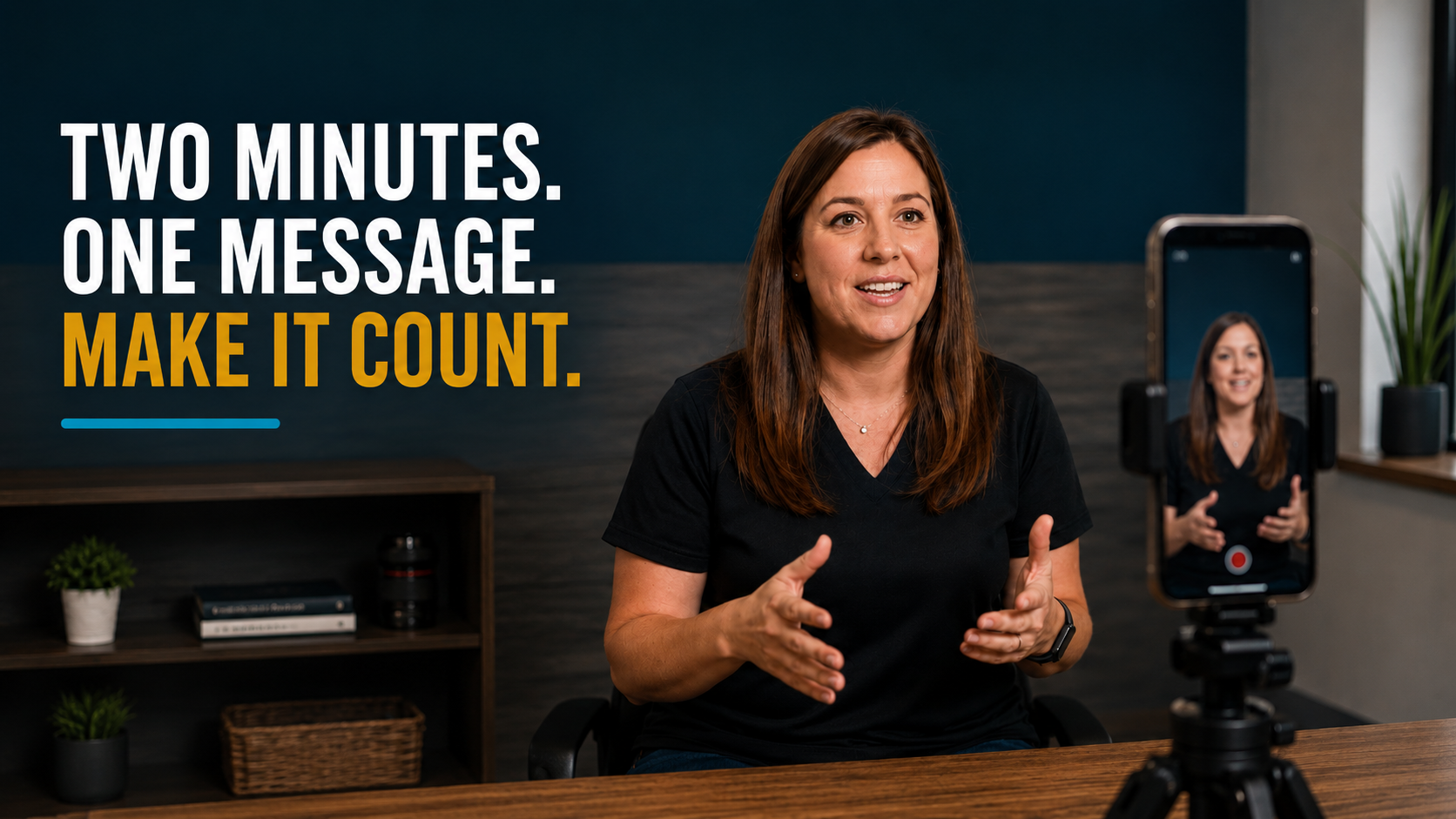
What a Two-Minute Promotional Video Should Include
A two-minute promotional video should show who the business serves, what problem it solves, how it helps, why the viewer should trust it and what the viewer should do next. The video should focus on one clear message. It should not attempt to explain every service, introduce every employee or tell the company’s full history. The goal is to help the right person understand the business and take one next step.
A strong two-minute video usually includes a hook, the customer’s problem, the business’s solution, real proof, one clear difference and a direct call to action.
Start With the Viewer, Not the Business
Open With a Strong Hook
Use the first several seconds to give the viewer a reason to keep watching.
The opening could be a question, a customer problem, a clear benefit or a quick look at the final result. Avoid beginning with a long logo animation or a general company introduction.
Identify the Audience and Problem
Make it clear who the video is for and what problem the business helps solve. A viewer is more likely to continue watching when the message feels relevant. Speak directly to the customer’s concern instead of beginning with a list of services.
Explain the Solution Clearly
Show What the Business Does
Explain the main product, service or process in plain language. Focus on the result for the customer, not every feature the business offers.
For example, a contractor may explain how the company helps homeowners avoid delays and confusion. A healthcare practice may focus on making it easier for patients to understand their options.
Use Real People and Real Locations
Show the owner, employees, products, equipment, workplace or customer experience whenever possible. Useful footage may include:
An employee helping a customer
A product being made or used
A service being performed
A completed project
A short interview with the owner
A behind-the-scenes look at the process
The footage should help the viewer understand what working with the business may feel like.
Build Trust With Proof
Show Evidence That Supports the Message
Use real examples instead of broad claims. Proof may include customer feedback, completed work, a clear process, experience, before-and-after footage or a brief example of a problem the business solved.
Avoid statements such as “we are the best” when the video could show something more specific and believable.
Explain One Clear Difference
Give viewers one reason to remember the business.
That difference may be the people, process, local knowledge, speed, selection, experience or level of service. One specific difference is easier to remember than several general claims.
End With One Clear Next Step
Tell the viewer exactly what to do after watching.
The call to action may ask the viewer to call, visit the website, schedule an appointment, request an estimate, visit the location or send a message.
Do not give several competing instructions. Choose the action that best supports the video’s main purpose.
A Simple Two-Minute Video Structure
The following timing is a planning guide, not a fixed rule:
0 to 10 seconds: Get attention with a need, question or result.
10 to 30 seconds: Identify the audience and problem.
30 to 75 seconds: Explain the solution.
75 to 105 seconds: Show proof, people and work.
105 to 120 seconds: State the difference and give one next step.
As a planning estimate, a two-minute script may contain about 250 to 300 words. Interviews, demonstrations and natural pauses may require fewer words.
Common Promotional Video Mistakes
Common problems include:
Starting too slowly
Trying to explain too much
Reading a script in an unnatural voice
Using only stock footage
Ignoring sound quality
Listing services without explaining their value
Ending without a clear call to action
A polished edit cannot repair an unclear message. Decide on the audience, purpose and next step before filming.
When Professional Video Help Makes Sense
A business may be able to produce a simple video internally when the message is direct, the location is quiet and someone can manage the script, framing, lighting, sound and editing. Outside help may be useful when the video requires interviews, several locations, custom graphics, stronger audio, planned lighting or several versions for different platforms. Businesses that need support can learn more about professional video production from Magic Mile Media.
Final Answer
A two-minute promotional video should focus on one audience, one main problem, one solution and one next step. Start with the viewer’s need. Show the real people and work behind the business. Provide specific proof and end with a clear action. The video does not need to explain everything. It needs to make the most important message easy to understand and remember.
Frequently Asked Questions
How many words should a two-minute video script contain?
About 250 to 300 words is a useful planning estimate. The right length depends on the speaker, pauses, interviews and amount of visual storytelling.
Should the owner appear in the video?
The owner should appear when their personality, knowledge or customer relationships help build trust. Another employee or narrator may be a better choice when they connect more naturally with the audience.
Should a promotional video include customer testimonials?
A short and specific testimonial can support the message. Keep it focused so it does not take over the full video.
Can one two-minute video be used on every platform?
The full video may work well on a website or during a presentation. Shorter versions with faster openings may work better for social media and digital advertising.
Is professional equipment required?
No. A phone can produce a useful video when the lighting, sound, framing and message are clear. Professional production becomes more useful as the project grows in complexity.